Sunday, November 27, 2016
Trying to keep it natural? That does not mean you can not play around with various styles and colors. In fact, natural hair provides the perfect canvas for playing around with various kinds of colors so as to bring out your desired style.

However, don’t just go for an all out dye. There are various precautions that you may need to keep in mind when it comes to coloring your natural hair. Perhaps one of the most important is knowing the right kind of hair color to go for. Trust us. It is never random. Also consider how the color is going to affect your curls as well as the amount of upkeep that you will need after you have added the color.
Here are some useful tips that you need to keep in mind before dyeing your hair and the after care tips that you need to incorporate:-
You could use an at-home dye: If you will be doing a simple one-dimensional dark hue, then you could as well utilize an at-home dye. This generally doesn’t involve a lot of complications and any unevenness will not be as pronounced. It also helps that at-home hues for hair coloring have improved considerably and should serve you well.
Buy several colors so as to be on the safe side: The lasting you want to grapple with when coloring your natural hair is having certain sections of your hair that are not well colored. Do not underestimate the thickness of your hair. A lot of women do.
For DIY natural hair coloring, choose gel or liquid formulas: These are best preferred because they offer you full coverage. This is in contrast to the foam formulas that will not easily penetrate strands that are densely curled.
Go to a salon if you want to lighten your hair: People have different types of hair and achieving a multi-dimensional coloration using the exact formulation may not be as easy as you would anticipate. With salons, you can work with a professional stylist that is well versed with matters color.
Your hair dyeing process should be slow and steady: In order for you to avoid affecting the curl pattern of your hair, make the process a slow and steady one. The curls will remain largely intact if the coloring has been done professionally by a professional stylist. There are certain things to avoid such as excessive lightening of the hair in a single session as this is likely to damage your hair and can even adversely affect your coils. There will be a temporary loss of elasticity in the hair if there is a large difference between the natural color of your hair and the desired shade that you wish to realize.
Blonde gives you a bold look but at a cost: To achieve a blond hair color, you will have to grapple with multiple processes. You will also need to utilize high volume developers and the processing times are generally longer. For some women, this can spell disaster. If you are going to dye blond, I highly recommend using the services of a professional stylist. They will need to go through a lengthy dyeing process with you so as to get your desired blonde color. A good hair stylist also knows the highlight coloring techniques that will prevent your hair from getting damaged. Once you have dyed your hair blonde, there are also various protective styles that you should use such as cornrows, box braids and chignons. These styles will be easier on your hair strands after it has undergone an intense hair dyeing routine.
Avoid using the shampoo just before the hair dyeing: Don’t wash your hair before dyeing it. Dirty hair allows for a very effective hair application. Also the natural oils on your scalp will serve as a protective buffer between your scalp and the dyes being used in the hair coloring.
Perform regular deep hair conditioning: After you natural hair has been color-treated, prepare for some extra tender loving care so as to ensure it stays in the best shape. Buy some excellent quality hair dyes. For the best results, apply some heat when coloring your hair.
Buy color-preserving shampoos: This will provide your hair with the extra protection after you have dyed it. These generally contain a layer of protection that prevents the stripping out of the color from your hair.
Sunday, November 27, 2016 0
Saturday, February 25, 2012
This is not yet smash it but an interesting idea for those of us crazy about our beautiful African hair! I spotted it while hunting for black hair applications on Grow VC which is a crowfunding platform to help people with good ideas to launch their projects through funding from the crowd. A group of investors can chip in and finance various projects and acquire a share of the ownership on your project while giving you the much needed lifeline and expertise to see your idea through to success.
While black/African hair is a multi-billion dollar business, not many African or non African entrepreneurs have invested in online black hair tools be it online hair styling, online hair social network for African sisters, online hair tips, online apps for black hair! While someone please do that? I will definitely pump a thousand bucks to see such a project come to fruition.
Hairslayer.com is more of a directory of hairstylists and barbers primarily based in the US. It's a good idea but would rather need greater input in terms of content creators, applications, more robust social networking features, hair tips, hair recommendations, videos on black hair styling and more. So am urging African sisters out there with a tech bent who understand hair, create some portal of this nature and it would be a smash hit! After all, business in black/African hair is worth billions of dollars.
While black/African hair is a multi-billion dollar business, not many African or non African entrepreneurs have invested in online black hair tools be it online hair styling, online hair social network for African sisters, online hair tips, online apps for black hair! While someone please do that? I will definitely pump a thousand bucks to see such a project come to fruition.
Hairslayer.com is more of a directory of hairstylists and barbers primarily based in the US. It's a good idea but would rather need greater input in terms of content creators, applications, more robust social networking features, hair tips, hair recommendations, videos on black hair styling and more. So am urging African sisters out there with a tech bent who understand hair, create some portal of this nature and it would be a smash hit! After all, business in black/African hair is worth billions of dollars.
Saturday, February 25, 2012 0
Friday, February 17, 2012
For a beauty conscious African woman, hair is one of our most treasured possessions and a fashion issue. Given the texture of our hair, we have many options to give ourselves very unique looks! Women of African descent are at the forefront of innovations in hair styling, what we can put on our buy heads is only limited by our imaginations. In some previous post on this nice hair blog, a colleague discussed that braids are a natural design for an African woman for the simple fact that they look quite nice when done in the right way and are relatively very easy to maintain!
For many African women, braids and cornrows have become the hairstyles of choice, they have been a part of our fashion sense from time immemorial. A typical rural life or an African woman involves an afternoon spent quietly ;listening to music under a shade while lines of beautiful braids slowly form a pattern on the head!
Even today, braids and cornrows still have a star attraction! Alicia Keys clearly is one of the famous faces and heads on braids. Other famous women and girls :) who have proudly spotted braids include Jill Scott and Malia Obama.
Although braids have become popular especially in the recent times, the oldest hairstyle in Africa is probably the corn rows which have been worn by African women throughout the continent over the centuries. Both braids and corn rows are quite versatile allowing much flexibility to the hair stylist to play around with your hair for some really stunning look! Braids and cornrows give African women a very fresh natural look and feel. They free you from the stress of a thousand chemicals and allow you to concentrate on the more important things in life while looking good!
Braiding is a very popular African art. African women have been braiding not just hair but baskets, ornaments, mats, sweaters. It takes the time and endurance that's inbuilt in the African women. But braiding is not unique to Africa. many other societies have been braiding the hair particularly in Western Europe and Asia.
Braiding involves taking three strands of hair, starting at the scalp and overlaying one strand on another, until the desired effect is created. Cornrows are braids that have been under-woven to lie flat on the head and then sculpted into simple or complex parting and sectioning.
The following are the more popular types of braids common amongst African women:
Microbraiding was a braiding style that was quite common with African American women and women in the Caribbean but it since gained a loyal following amongst African women particuplarly in the cities. The advantage of Microbraids is that they can last for several months without the need to redo them. The style is still very common amongst African American women, a hair style of choice! Microbraids give women of African descent an awesome look, which explains their rock star status amongst hair styles! There are concerns that microbraids stuff thee air thus preventing natural air circulation on your scalp. To avoid these and other harmful effects such as hair breakage, remember to undo them every two to three months. There are several tips available on how to care for your microbraids.
Cornrow or track braids
Cornrows are braids that are under woven to lie flat close to the scalp and as we have discussed, they are quite versatile and the type of cornrows that you would like to spot on your hair will only be limited by your imagination. Cornrows can be plaited into varied complex designs and styles such as diagonal, zig-zag, spiral, cross-over (waffle) and even Mohawk patterns. Hair extensions and colored pieces can also be added to the braids for a more dramatic look.For many African women, braids and cornrows have become the hairstyles of choice, they have been a part of our fashion sense from time immemorial. A typical rural life or an African woman involves an afternoon spent quietly ;listening to music under a shade while lines of beautiful braids slowly form a pattern on the head!
Even today, braids and cornrows still have a star attraction! Alicia Keys clearly is one of the famous faces and heads on braids. Other famous women and girls :) who have proudly spotted braids include Jill Scott and Malia Obama.
 | |||||||
| Alicia Keys on Braids |
 |
| Rihanna wears her stylish braids |
Braiding is a very popular African art. African women have been braiding not just hair but baskets, ornaments, mats, sweaters. It takes the time and endurance that's inbuilt in the African women. But braiding is not unique to Africa. many other societies have been braiding the hair particularly in Western Europe and Asia.
Braiding involves taking three strands of hair, starting at the scalp and overlaying one strand on another, until the desired effect is created. Cornrows are braids that have been under-woven to lie flat on the head and then sculpted into simple or complex parting and sectioning.
The following are the more popular types of braids common amongst African women:
Microbraids
Microbraids are elegant looking tiny delicate braids that are carefully woven into the hair. Microbraiding was a braiding style that was quite common with African American women and women in the Caribbean but it since gained a loyal following amongst African women particuplarly in the cities. The advantage of Microbraids is that they can last for several months without the need to redo them. The style is still very common amongst African American women, a hair style of choice! Microbraids give women of African descent an awesome look, which explains their rock star status amongst hair styles! There are concerns that microbraids stuff thee air thus preventing natural air circulation on your scalp. To avoid these and other harmful effects such as hair breakage, remember to undo them every two to three months. There are several tips available on how to care for your microbraids.
 |
| Awesome Awesome Microbraids! |
 |
| Microbraids last for months and give women of African descent a stunning look! |
 | ||
| Originally an African hairstyle, Cornrows are still very popular throughout the African continent and the African diaspora. The hairstyle has also been adopted amongst other racial groups. Cornrows are quite versatile and countless stunning hairstyles can be achieved! |
 | ||
| Cornrows are quite a versatile hair styles and many "interpretations" and varied styling can be achieved on the hair. |
 | |||
| African roots: Malia Obama's Cornrows |
Goddess Braids
Goddess braids are characterized by large cornrows that are quite high and thick and are plaited in various styles around the crown, side, and back of the head. Due to the size of the cornrows, the scalp is more visible than in the case of microbraids. The designs can be quite elaborate when it comes to doing the Goddess braids. Women can choose braids ending at the side of the head or at the nape of the neck or you can have them twisted in a stylish and elaborate up-do. The up-do style is always popular during weddings and other formal events. Goddess braids are not very popular in Africa nowadays although a few years back, they were the star attraction! |
| African Hairstyles: Goddess Braids, like an African Goddess! |
Ghanaian Braids
Ghanaian braids hairstyles have been very popular with women of African descent particularly on the African continent. A decade ago in Nairobi, Ghanaian braids was the in thing and many women spotted the Ghanaian hairstyle. Ghanaian braids normally involved cornrows with synthetic extensions at the end. Some women eventually dropped the hairstyle when the fad ended because it pulls on the hairline making the women appear as if they are having a receding hairline. :( Ghana braids are always plaited with an extension and unlike regular cornrow, the hair stylist will keep adding tiny sizes of the artificial hair at regular intervals as they weave. Eventually you will achieve the look of the cornrow getting bigger as it progresses down the line; you will also see the intervals where the artificial hair extension were added.
Some women still prefer Ghanaian braids hairstyles. My piece of advice, don't do Ghana braids often, or you will develop a balding look due to the excessive strain placed on the hairline. Ghana braids are also suitable for people with tough hair and lots of hair!
Ghana Braids hurt like hell and women normally take pain killers after visiting their hair stylists. If you can endure the strain and the pain, Ghanaian braids produce a stunning look!
 |
| Ghana Braids Hair style |
 |
| Ghana Braids interlaced with blonde artificial hair |
 |
| Ghana Braids |
 |
| Ghana Braids Hairstyle viewed from the back |
 |
| Ghana Braids hairstyle top view |
 |
| Ghana Braids Hair style rear view |
Invisible Braids
African invisible braids are a currently popular style obtained by braiding the hair into very thin braids that don’t look like braids but just strands of hair. Only about 1 inch of hair is braided while the rest of the hair is left loose. The natural hair is blended into the loose weave hair. The style offers the best of both worlds–the convenience of braids and the beauty of stylish hair. |
| African hairstyles: Invisible Braids, getting the best of both worlds! |
Friday, February 17, 2012 0
Saturday, December 31, 2011
Every African Woman Should rock their natural tresses
Rocking your nappy stresses is a trend here to stay. Why? Women are opting to go natural because long-tern chemical treatments, no matter how gentle, damage the hair. But if you are one of the many women who can't imagine a life without chemically-treated hair...relax: we will help you wear your natural kinks and coils with confidence.
BIG CHOP
HAIR TEXTURE
Once you are fully natural, find out what best suits you. You have probably had chemically-treated hair for so long that you have forgotten what your natural hair texture is like. Your hair has a curl pattern, and as all curls are not created equal, there no universal care regimen tat works for every type of curl. The key to healthy, happy curls is to understand your personal hair texture. Remember, you may have multiple textures on one head of hair.Hair Type 1 is bone straight with no curl pattern(think Caucasian hair or mixed-race individuals). Hair Type 3 has a tighter curl pattern, shaped like an S, while Hair Type 4 has the tightest coils and kinks of them all. Most Afro hair falls into this group.
HAIR CARE BASICS
Regardless of your hair texture and curl pattern, here are a few basic tips to help you take care of your natural hair:The right products: Don't use products you previo usly used on your chemically-altered hair; they will not gel with the texture of your new hair. Find products specifically designed for natural hair. The Internet is a good place to source such products. Experiment to see what's work best and read the labels.
Moisturise, moisturise, moisturise:
Afro hair, especially in its natural state, is naturally drier than any other type of than any other type of hair. Find products that add moisture to your hair so your hair does not get brittle and break.
Co-wash your hair:
Shampoos tend to strip moisture from natural hair, so be careful of overuse. Natural hair may require quite a bit of product to style, so you cannot entirely eliminate shampoos from your regimen. Opt for clarifying shampoos to remove product build-up. Co-washing your hair-using conditioner as opposed to a shampoo- is a moisture-rich alternative.
Detangle your hair
Snip those ends: Trim your natural hair regularly to avoid split ends. Trimming is best when your hair is in a very straight state, so blow dry and flat iron before a trim.
Keep the heat at bay: Chemical damage is not the only sort of damage that can affect Afro hair; heat damage is also a big problem. Keep blow-drying and flat ironing to a minimum, and apply heat protectors before applying heat to avoid frying the hair.
Versatility: Natural hair is very versatile, so play around with your do to keep it fresh. Wear it in a curly 'fro, an Afro puff, braided or cornrowed, with a twist out or braid out, in locks, or straightened. And don't forget pretty accessories such as bands, clips, bows and flowers.
Saturday, December 31, 2011 0
In the last blog post, I covered a few reasons why braids will remain timeless. From time immemorial, the braids have been the hairstyle of the African woman, from the time of the Ancient Egyptians to the time of the Greeks, Romans, Mali Empire, Ghana Empire to date. Braids are the most popular African hairstyle and after six thousand years of African Fashion, they are still as popular and cool! So here are a few tips on looking after your quintessentially African hairstyle:


- If your hair is relaxed or dyed, ensure that prior to braiding, you have treated your hair with a strengthening protein conditioner.
- Avoid too tight cornrows as they can result in a receding hairline.
- Use a good braid spray shampoo. Gently work the shampoo into the braids and onto the scalp, then rinse thoroughly. Do not pile your braids on top of your head when shampooing. It is important to keep them in a downward direction to keep them from tangling . This is not a daily treatment.
- Use a cream or spray hair conditioner to prevent dryness of the scalp and brittle hair.
- Nourish your scalp with oil to prevent flakiness.
- Wrap your hair in a satin scarf at night to protect your hair from tangling.
- Avoid alcohol-based hair products as they tend to cause hair damage and breakage. Natural oils such as jojoba and coconut are great for keeping the scalp well moisturised.
- To keep your cornrows in tip-top condition, keep the hair moist by spraying as needed with a moist battle.
- TIP: Hair does not grow faster when in braids or cornrows. Basically, hair growth is determined by genetics, diet and the amount of care you put in to avoid breakage.
Africa Braids
As we try to stay warm and fashionable during the cold season, we often despair about our hair. Chilly temperatures tend to leave our natural locks looking dull and lifeless, which is why braiding and cornrows are such a good idea. Often associated with Sub-Saharan African women , braids have been around for centuries, and have been depicted in Greek and Roman Art.
Why Braids are Good News
They are easy to style: Braids are not hard work. Let them swing free, hold them back in a casualty elegant pony tail, or try an elaborate up sweep for some serious glamour. A pretty hair accessory adds the "wow" factor.
They save time: Busy girls choose braids because they free them up to do more fun things. Brides, for instance, often opt for braids because they see them through the main event and the honeymoon in style . No stylist needed(or wanted) on honeymoon, thank you!
They shrug off bad weather: Braids don't care if it's raining; in fact, moist air just makes braids look glossier.
They protect the natural hair underneath: While you show off your gorgeous braids to the world, your natural tresses are growing underneath, free from exposure to harsh dyes and relaxers.
A word of warning to women who love their braids: Continuous braiding weakness the hairline and results to a type of hair breakage known as traction alopecia. Plus, inadequate care of braided hair can result in a flaky scalp and brittle hair.
Thursday, December 29, 2011
This section today is dedicated to the changing hairstyles of African women, particularly in Africa cities. African women are getting bolder and more adventurous when it comes to wearing the hair. It is said that the hair is the crown of every women, hair maketh the woman and in African cities, this particularly rings very true. Hairstyles in rural Africa tend to be uniform weave but in the cities, women are embracing and experimenting with various cuts and ideas.
The importance of the crown has grown even for African men. African men used to and still spend very little time on their hair. We just shave it and forget until after another two weeks when we remember to drop in for another cut but times are can changing. Today, rather than just being a nuisance to be rid of, hair has become a fashion statement.
Communication and exposure to new cultures has played an important role in influencing hairstyles and hair cuts. One such hairstyle that has come about as a result of this influence is the infamous Mohawk style. The Mohawk hair style has been redesigned in various ways from the traditional rock star design to braided dread-locks among other designs. Hairdressers are regularly innovating and introducing new variations of the hairstyle. The Mohawk is particularly popular in nairobi with young campus girls wearing cool Mohawks.
But what has contributed to the popularity of this new trend? Is it just the movies and foreign influence or there is something particularly complementing and appealing to the tastes of Kenya's and Africa's young population? According to some stylists, the Mohawk has been popularized by the fact that it's unisex and many urban hip youth in African cities have rushed to the trend because their peers, both male and female are spotting the Mohawk.
For Kenyans, the Mohawk is also an indigenous hairstyle. Many Kenyan tribes traditionally wear "Mohawks" on the hair as shown below. The irony is that the hairstyle has been with us for centuries but we ignored it and rushed for the Western look. And then when the West adopted the style, we imported the style from the West again :) True creatures of imitation. But it's interesting to see how more and more people in African are experimenting with various hairstyles in the search for "the perfect" 21st Century look.
The importance of the crown has grown even for African men. African men used to and still spend very little time on their hair. We just shave it and forget until after another two weeks when we remember to drop in for another cut but times are can changing. Today, rather than just being a nuisance to be rid of, hair has become a fashion statement.
Communication and exposure to new cultures has played an important role in influencing hairstyles and hair cuts. One such hairstyle that has come about as a result of this influence is the infamous Mohawk style. The Mohawk hair style has been redesigned in various ways from the traditional rock star design to braided dread-locks among other designs. Hairdressers are regularly innovating and introducing new variations of the hairstyle. The Mohawk is particularly popular in nairobi with young campus girls wearing cool Mohawks.
 |
| The Mohawk Hair Style |
 |
| An African Male with the Mohawk Style |
For Kenyans, the Mohawk is also an indigenous hairstyle. Many Kenyan tribes traditionally wear "Mohawks" on the hair as shown below. The irony is that the hairstyle has been with us for centuries but we ignored it and rushed for the Western look. And then when the West adopted the style, we imported the style from the West again :) True creatures of imitation. But it's interesting to see how more and more people in African are experimenting with various hairstyles in the search for "the perfect" 21st Century look.
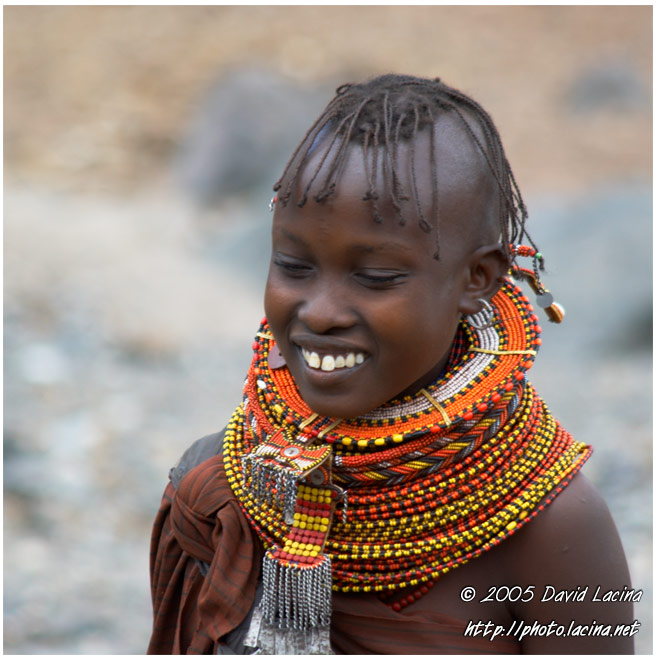 |
| Back to the roots: Could this be the reason why young African women are embracing the Mohawk so enthusiastically? |
Thursday, December 29, 2011 0
Wednesday, December 28, 2011
The hair industry has entered the Social media and social networking age. CutsofArt.com is a new social networking website for the hair industry. According to the website, CutsofArt.com is a "place where barbers, hair stylists and other hair professionals, as well as their clients can network and interact. It is also our goal to give corporate and independent hair product companies a way to connect with stylists, barbers and clients."

According to Markee Johnson, the Founder and CEO of CutsofArt.com, "
"The concept for CutsOfArt.com was born from an experience that came about during the Summer of 2011 while I was on vacation. I inevitably found myself in need of a haircut, but just didn't have the time to be searching all over for a barber that was not only local to me, but that was also good at his craft. ...CutsOfArt.com was founded just a few short months later in the Fall of 2011.
I wanted to create an online service that would allow people to search and find barbers and stylists all across the United States; whether they were searching for a professional in their home town, while on vacation, or even while on a business trip.
My team and I have found that while there are at least a few other websites offering a similar concept... they aren't doing it like we are! CutsOf Art.com is unlike any other online hair community in that we not only provide a list of quality barbers and stylists, but also barbershops, salons, makers of personal hair care products, styling tools and much, much more!
We also offer several opportunities for members to be featured and for their work to be put on display. From simply featuring an incredible piece of their art (cut or style) to featuring them personally via interview, and much more. ...We are more than a resource, we are a community!
CutsOfArt.com is an excellent way for clients to communicate personally with barbers and stylists on a daily basis. As members of our site barbers and hairstylists have a professional easy to use personal profile page where they can promote their work and provide a way for interested parties to get in touch with them for scheduling.
This exciting new concept creates growth opportunity, not just for barbers an stylists, but for shop owners, hair product companies, vendors promoting hair shows and hair events, and more!
Members have the opportunity to enjoy all these features and more for less than the cost of a single hair cut or style!"
"

According to Markee Johnson, the Founder and CEO of CutsofArt.com, "
"The concept for CutsOfArt.com was born from an experience that came about during the Summer of 2011 while I was on vacation. I inevitably found myself in need of a haircut, but just didn't have the time to be searching all over for a barber that was not only local to me, but that was also good at his craft. ...CutsOfArt.com was founded just a few short months later in the Fall of 2011.
I wanted to create an online service that would allow people to search and find barbers and stylists all across the United States; whether they were searching for a professional in their home town, while on vacation, or even while on a business trip.
My team and I have found that while there are at least a few other websites offering a similar concept... they aren't doing it like we are! CutsOf Art.com is unlike any other online hair community in that we not only provide a list of quality barbers and stylists, but also barbershops, salons, makers of personal hair care products, styling tools and much, much more!
We also offer several opportunities for members to be featured and for their work to be put on display. From simply featuring an incredible piece of their art (cut or style) to featuring them personally via interview, and much more. ...We are more than a resource, we are a community!
CutsOfArt.com is an excellent way for clients to communicate personally with barbers and stylists on a daily basis. As members of our site barbers and hairstylists have a professional easy to use personal profile page where they can promote their work and provide a way for interested parties to get in touch with them for scheduling.
This exciting new concept creates growth opportunity, not just for barbers an stylists, but for shop owners, hair product companies, vendors promoting hair shows and hair events, and more!
Members have the opportunity to enjoy all these features and more for less than the cost of a single hair cut or style!"
"
Wednesday, December 28, 2011 0
I borrowed this list from the Afrobella blog. Black is beauty is gaining new meaning, literally and many African American and African women are embracing natural hair. Even the HuffingtonPost has a post on this Natural Hair Becoming Even More Popular Among Black Women
Reports Huffingtonpost
"According to Mintel, a consumer spending and market research firm, the number of black women who say they do not use products to chemically relax or straighten their hair jumped to 36% in 2011, up from 26% in 2010.
What does this mean for the black beauty industry? There definitely needs to be a major shift in product development and care.The report also found that sales of relaxer kits have dropped by 17% between 2006 and 2011."
From Afrobella blog, the upcoming companies in the new black beauty industry include the following:


Reports Huffingtonpost
"According to Mintel, a consumer spending and market research firm, the number of black women who say they do not use products to chemically relax or straighten their hair jumped to 36% in 2011, up from 26% in 2010.
What does this mean for the black beauty industry? There definitely needs to be a major shift in product development and care.The report also found that sales of relaxer kits have dropped by 17% between 2006 and 2011."
From Afrobella blog, the upcoming companies in the new black beauty industry include the following:
- BelleButters : Get in touch with Tasha B, Owner/Operator of Belle Butters, LLC for the the best advice on the best products. She an avid social media user and you can engage her before deciding on what's best for you.

- Cush Cosmetics: CUSH stands for Color Us Simply Holistic, and that’s what this hair and skincare company keeps as their watchwords. The company was created because of the founders’ concern about the preservatives and chemicals being used in cosmetics, so CUSH Cosmetics products are all natural – made without synthetic preservatives, colors, fragrances, and ingredients like petroleum and mineral oil. If you like highly scented shampoos and conditioners, look elsewhere.


- Jaas Beauty. Read first hand reviews of this product on the Afrobella Blog

- aSili Bath and Body. : Asili is Swahili word for "authentic" or "natural". Read first hand reviews of this product on the Afrobella blog. You can also visit their website and review their range of products.

African men's hair styles normally vary from men to men, normally depending on the shape of the head. Most men, especially in the professional circles prefer a close shave while others would go for the total shave. Normally, men with round heads prefer the total shave while men with "V-shaped" heads might often go with a close shave or other numerous hairstyles, normally limited only by the imagination of your barber.
Although African men(or men of African descent) do not have many options in terms of hair styling, unlike their female counterparts who normally have a rich variety of styles to choose from, many African men still have a wide assortment of hairdos, haircuts and hairstyles to choose from. When looking for hair fashions, you must first decide whether you re in the class of long hair or short hair in terms of preference. Some African men prefer long hair but the vast majority will go with short hair.
After selecting your class of hair, short or long class, you need to decide on few suggestions. Remain as close to the organic growth of your hair as possible. Do not go against the grain of growth your hair. Remain "Organic". Trim and tweak what you have and make it appear the very best and complementing your hair. Some good barbers know how to bring the best in your hair.
The second step is to take your age into consideration. If you young and your hair still blooming then you re free to be adventurous and experiment with as many styles as you would wish. But if you are old and balding or receding choose your hair very careful. It's advisable to be conservative with your cuts if you re much older and your hair is not on your side. Low hair cuts would do with balding or receding hairline. After a few cuts, you will normally arrive at your "trademark cut".
Normally from my experience, your barber always knows about your hair much better than you. This is because the barber works with countless types of hair and shapes of heads and normally, they get an understanding on what each type of hair or shape of head requires. Always be friendly with your barber for specialized care and for guidance on the best cuts to suit your head and look :). I normally like striking conversations with my barbers and it has worked for me. Most barbers are very friendly people after all. Barbershops normally contain clippings or images of various styles so when you get into a barbershop, take time to explore
Your barber or hairstylist functions with various types of hair daily and is aware of your hair much better than anyone. Request for guidance or have a conversation with him or her the next time your in the chair. Also preserve up with the occasions pay out interest to the displays you view and the magazines you read if you see something you like get a mental image and discuss it more than with your barber. Remember that you will have to live with a bad hair cut for a whopping two weeks if you get it wrong :)
 |
| African Cuts |
 |
| A Cleaner Cut |
The second step is to take your age into consideration. If you young and your hair still blooming then you re free to be adventurous and experiment with as many styles as you would wish. But if you are old and balding or receding choose your hair very careful. It's advisable to be conservative with your cuts if you re much older and your hair is not on your side. Low hair cuts would do with balding or receding hairline. After a few cuts, you will normally arrive at your "trademark cut".
Normally from my experience, your barber always knows about your hair much better than you. This is because the barber works with countless types of hair and shapes of heads and normally, they get an understanding on what each type of hair or shape of head requires. Always be friendly with your barber for specialized care and for guidance on the best cuts to suit your head and look :). I normally like striking conversations with my barbers and it has worked for me. Most barbers are very friendly people after all. Barbershops normally contain clippings or images of various styles so when you get into a barbershop, take time to explore
Your barber or hairstylist functions with various types of hair daily and is aware of your hair much better than anyone. Request for guidance or have a conversation with him or her the next time your in the chair. Also preserve up with the occasions pay out interest to the displays you view and the magazines you read if you see something you like get a mental image and discuss it more than with your barber. Remember that you will have to live with a bad hair cut for a whopping two weeks if you get it wrong :)
Subscribe to:
Posts (Atom)


